

Role: Lead Designer & Brand Strategist
Tools Used: Adobe InDesign, Smartsheet (for tracking), Internal brand assets
Team: Internal marketing team
Objective:
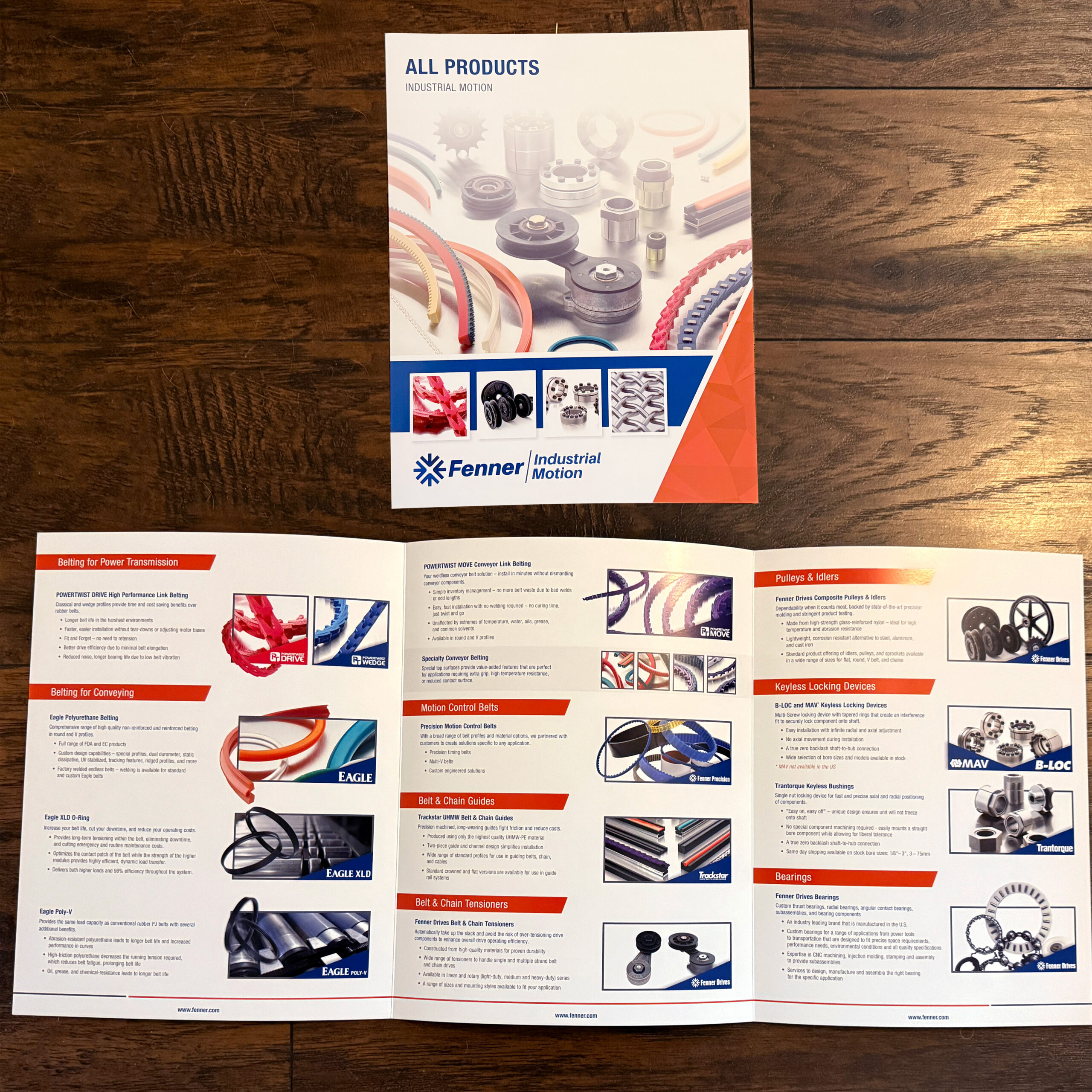
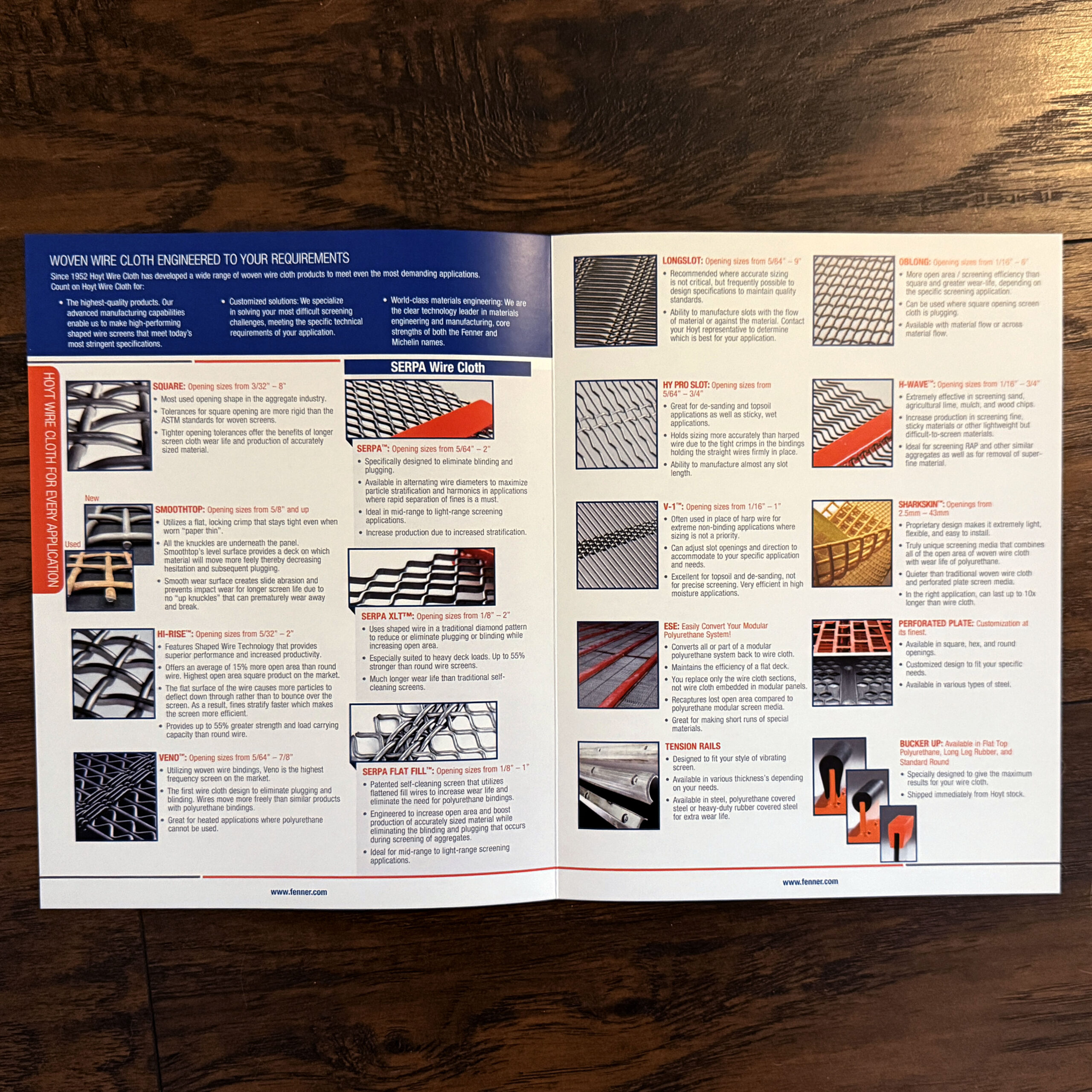
As part of a company-wide branding initiative, Fenner needed to overhaul its entire suite of print literature to reflect a unified identity. Previously, materials created by different teams across multiple brands lacked visual and editorial consistency. The goal was to establish a clear visual system that reinforced Fenner Precision Polymers unified brand presence while honoring the legacy of its sub-brands.
Process:
I led the strategy and execution of this redesign, starting with the creation of adaptable templates for each of Fenner’s three main brand groups. These templates included a defined visual hierarchy, modular content blocks, and consistent styling to ensure clarity across product lines. Each was carefully labeled for easy content insertion by different team members. Once the templates were finalized, I collaborated with our graphic designer to manage the update of over 400 individual pieces of literature. This process was aligned with the launch of the new corporate website to ensure a cohesive brand rollout.
One of the more complex aspects of the project involved change management. Many stakeholders had deep ties to legacy brands and were hesitant to shift toward a consolidated identity. I worked closely with teams to communicate the strategy, align expectations, and build consensus for the transition.
Outcome:
The redesigned literature provided Fenner with a professional, consistent, and scalable set of brand assets. It improved usability for both internal teams and customers while aligning all marketing materials under one visual voice. The successful launch helped support the broader branding initiative and reinforced Fenner’s position as a unified, modern brand.
Reflection:
This project highlighted the intersection of design and diplomacy—creating great visuals was only part of the work. Gaining stakeholder buy-in, navigating legacy brand pride, and building a shared vision for the future were equally critical to the project’s success.